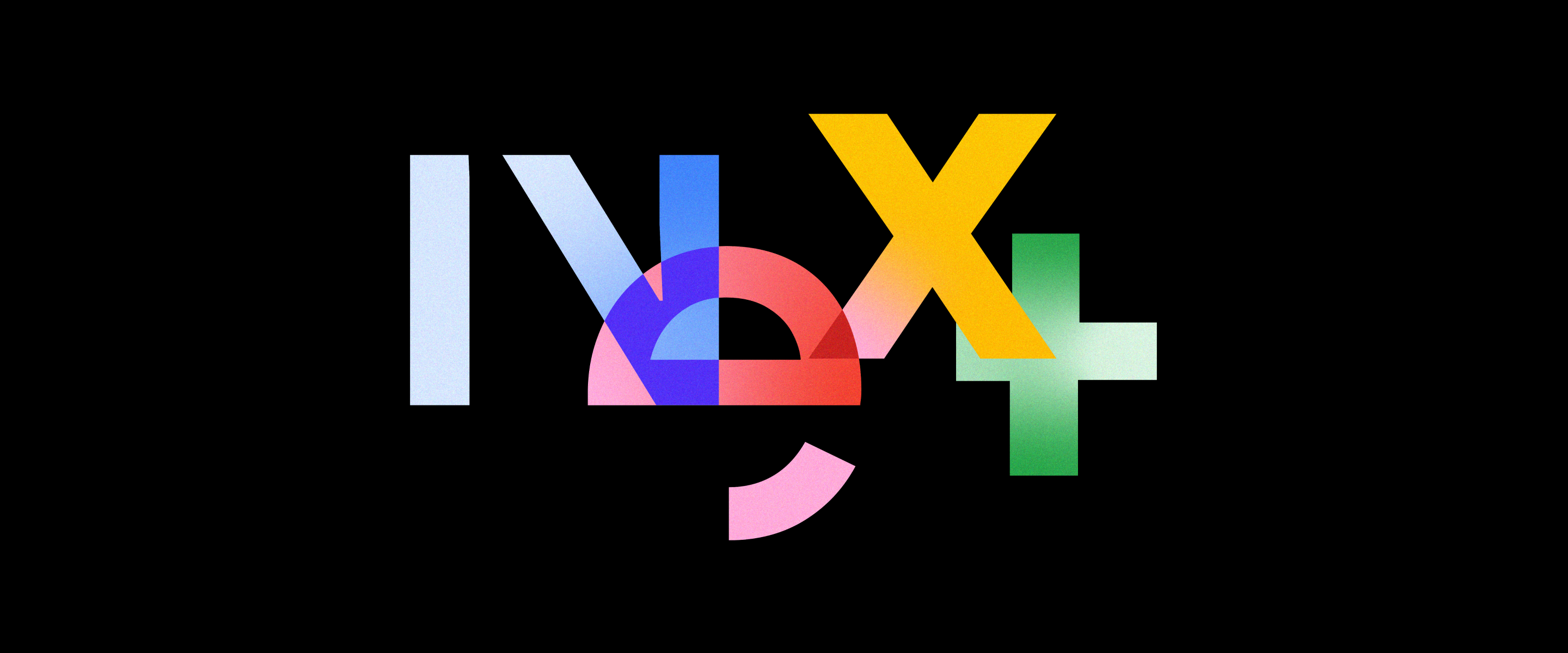
Google Cloud Next is Google Cloud’s flagship annual conference, bringing together developers, IT leaders, and businesses to learn about new products and platform capabilities. In 2023 and 2024, the focus shifted from scaling the event to improving the quality of the attendee experience.
I led design across both years, working directly with Google stakeholders while mentoring two designers on my team. I was hands-on throughout the work, setting direction, designing core flows, and partnering closely with product and engineering to ship under tight timelines.
Design Director & Design Lead
Discovery & Ideation, Design Research, UX/UI Design, Prototyping, Design System
2023 - 2024
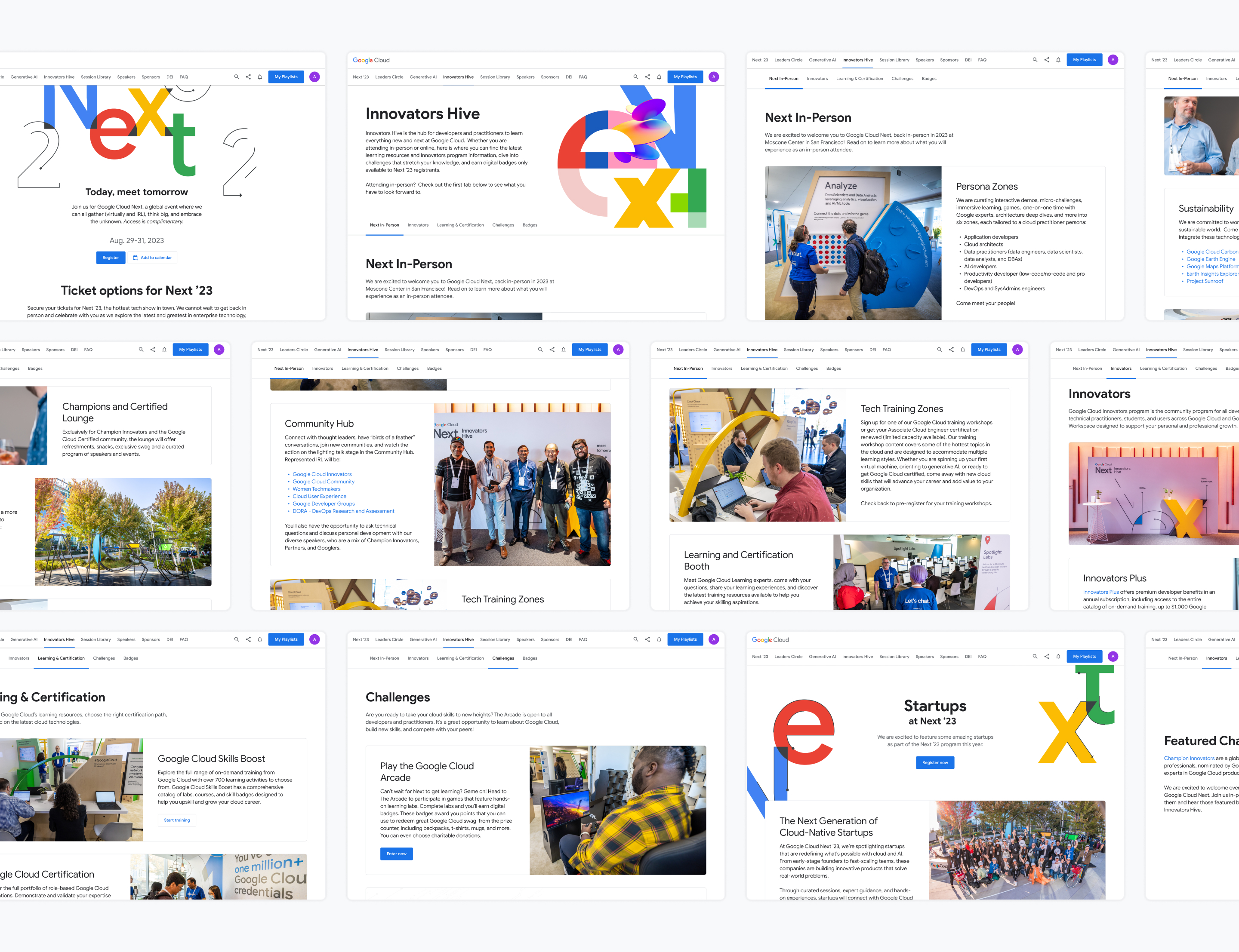
As Next matured, two issues became increasingly clear.
First, attendees struggled to build agendas that actually matched who they were and what they wanted to learn. High-level sessions filled up quickly, and the process of finding alternatives felt overwhelming and inefficient. For users, poor scheduling meant lower engagement before the event even started. Helping attendees quickly land on a relevant agenda was critical to their overall experience.
Second, the visual language of the event no longer reflected where Google was as a design and technology leader. The experience relied heavily on Material Design 2 patterns well after Material 3 had been introduced. As Google leaned more visibly into generative AI, the event experience felt behind the curve.By 2024, the expectation was to fix both the functional and perceptual gaps. For Google, Next needed to reflect where the company is today. A dated visual system undermined the credibility of the forward-thinking nature of Next.
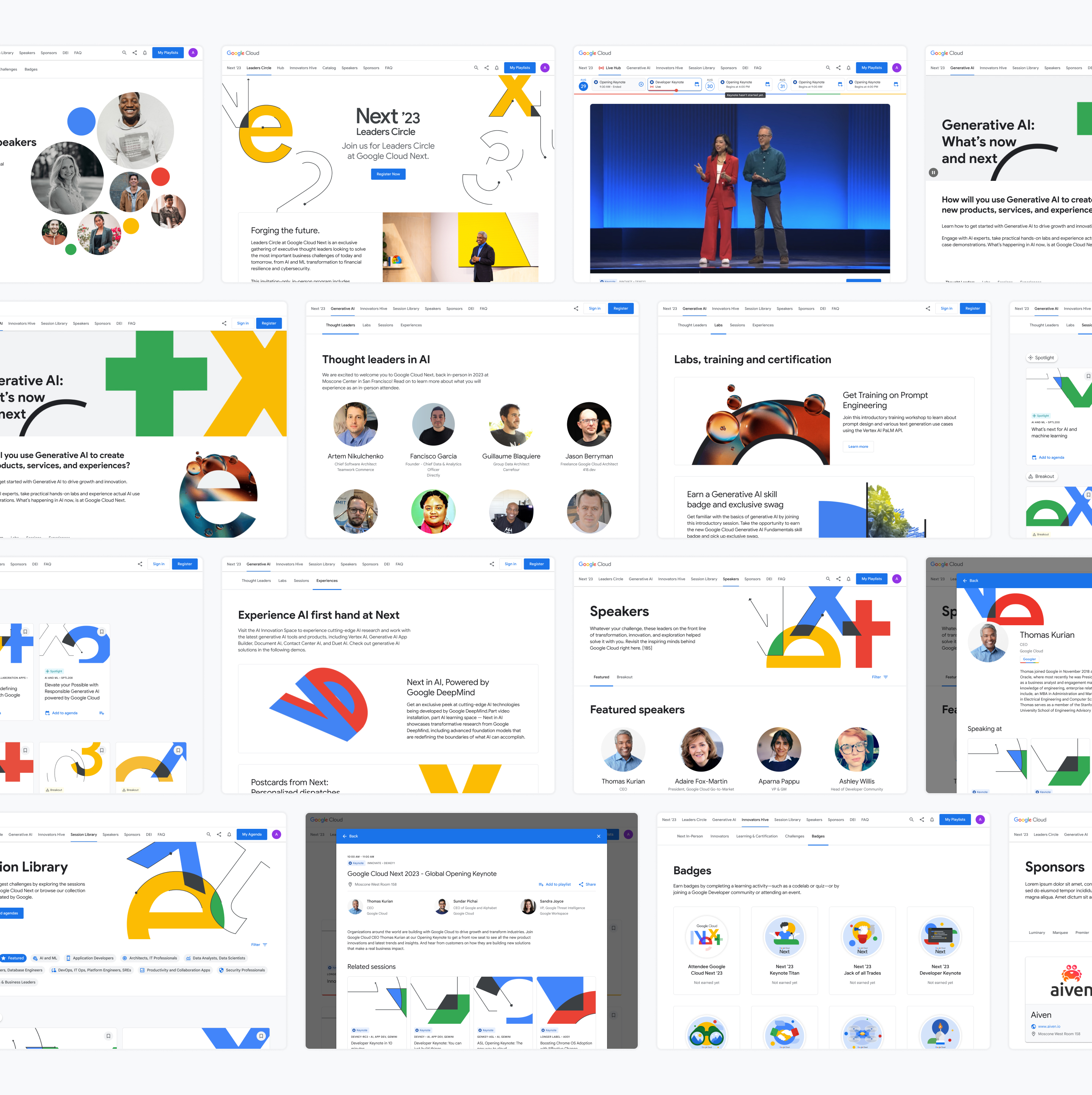
AI became one of the biggest draws to Next ’23. Earlier announcements around Gemini and Vertex AI significantly increased demand for AI-related sessions and content. While AI was added later in the project timeline, it was intentionally integrated across the platform rather than treated as a one-off feature.
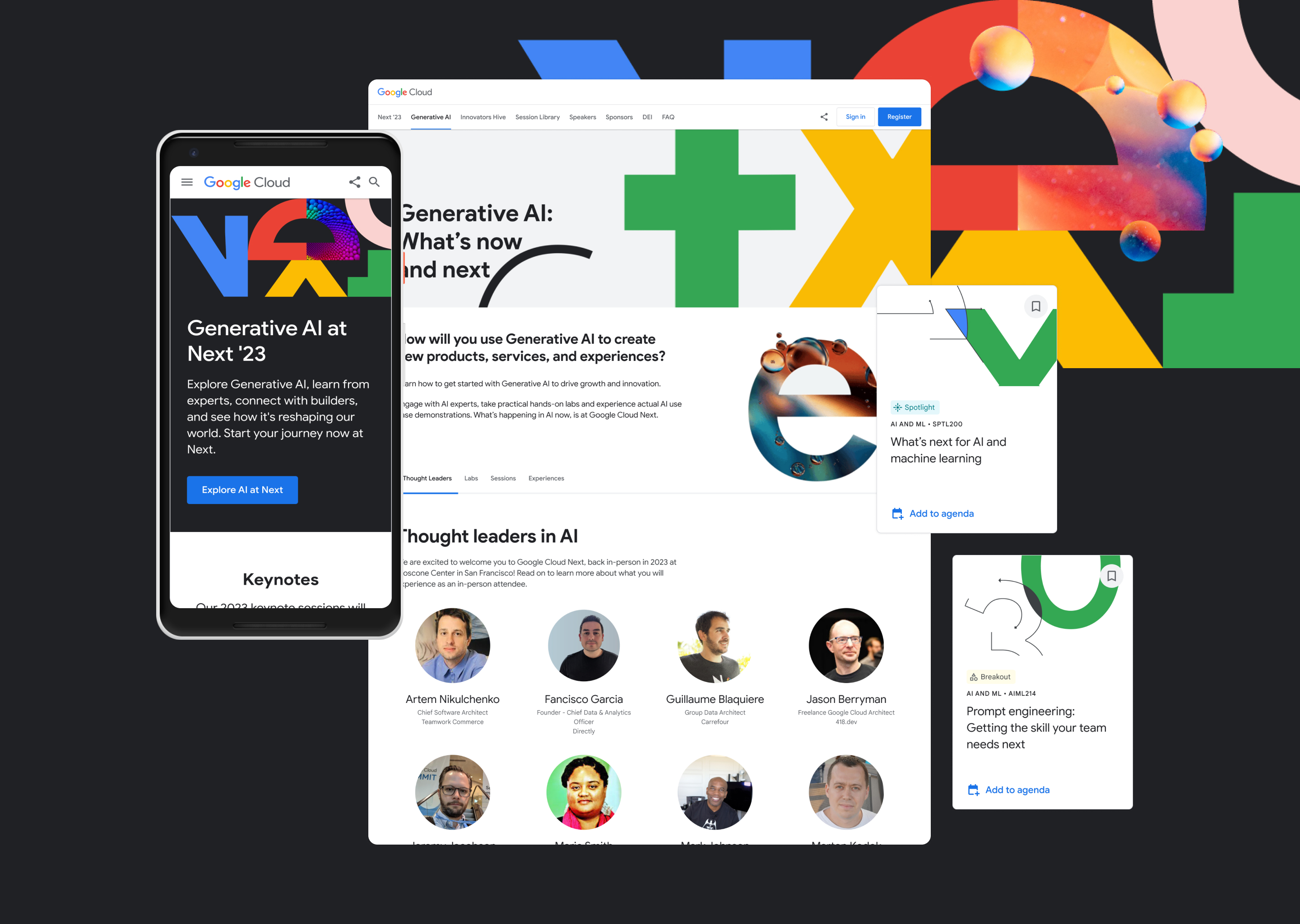
AI was represented through a dedicated Generative AI section on the site, as well as individual sessions and tracks integrated across each day of the event. This section allowed attendees to explore Generative AI through thought leadership, product deep dives, labs, training, and certifications, making the sessions accessible to a wide range of audiences.
Giving AI a dedicated space on the site, alongside consistently high-demand sessions that filled quickly, reinforced AI as a core focus of Google Cloud Next.
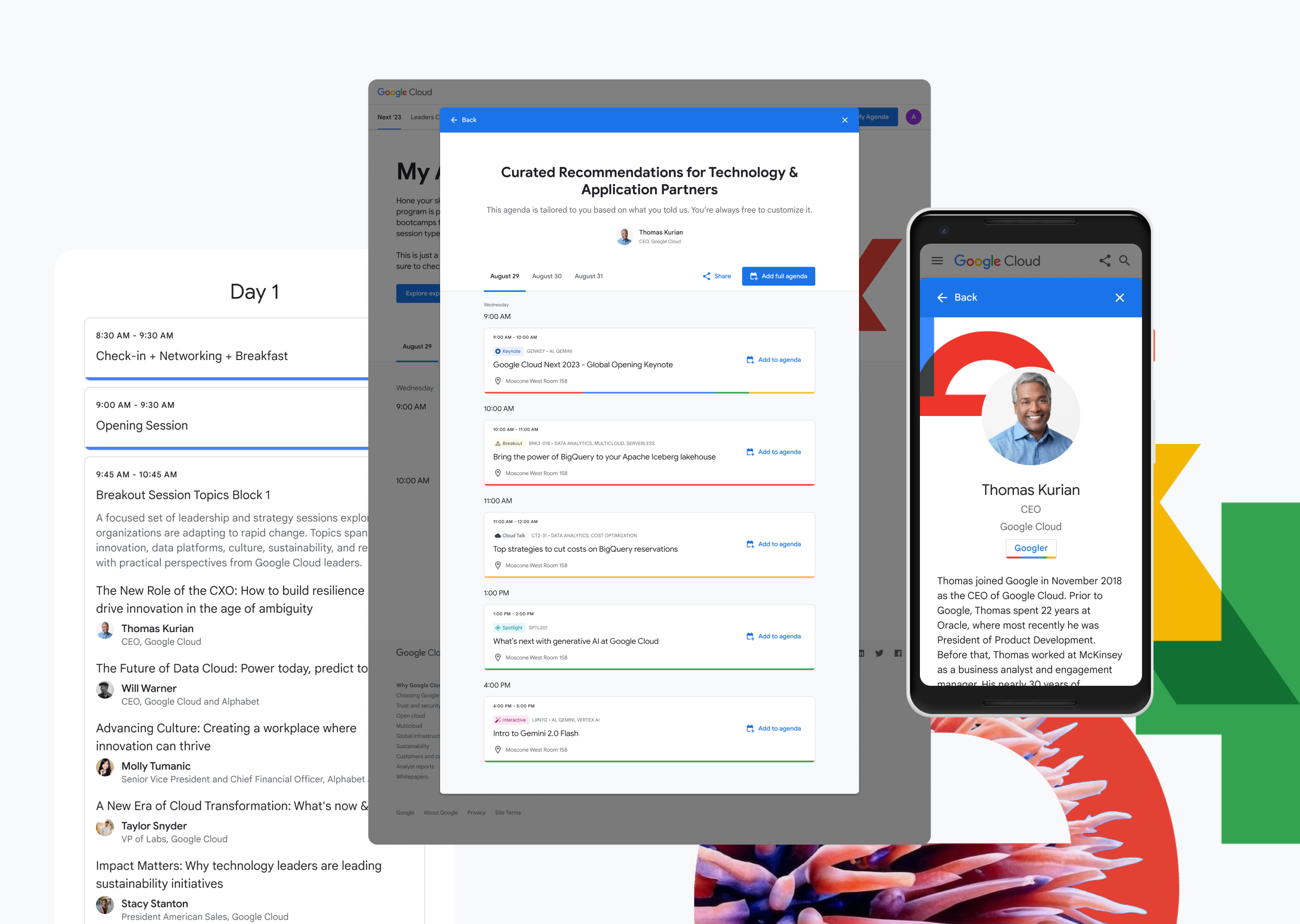
With hundreds of sessions and limited time, attendees needed a faster way to build a schedule that felt relevant and intentional.
I introduced clearer onboarding and a semi-automated agenda creation experience that helped attendees quickly assemble a personalized schedule based on their interests, role, and goals. Recommendations surfaced relevant sessions earlier in the flow, reducing the effort required to navigate the program while still giving users full control to accept, reject, and edit their agenda.
This balance of guidance and flexibility helped reduce frustration, improved discovery of high-value content, and made the experience feel more approachable, especially for first-time attendees.
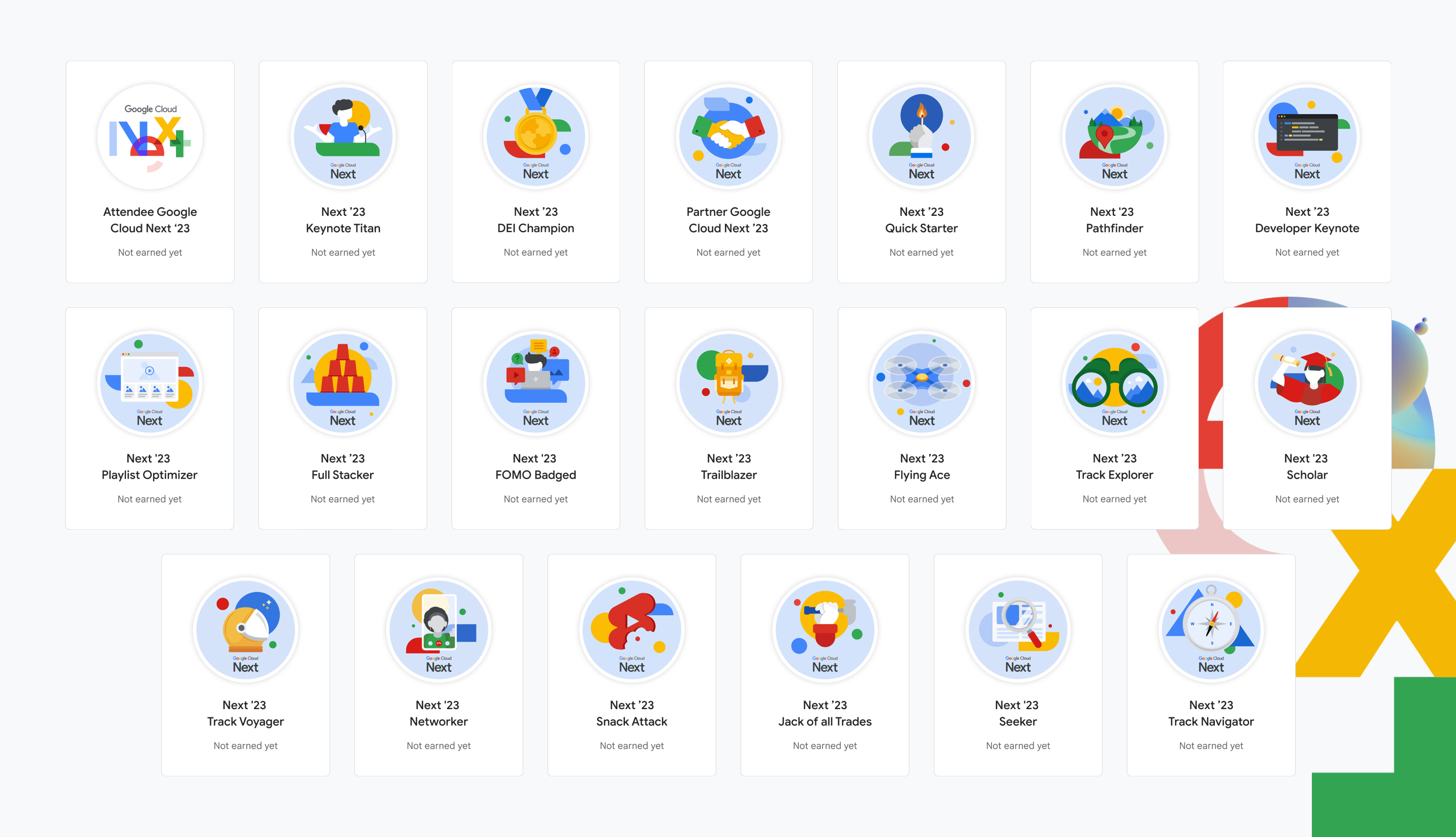
Badges are a key engagement mechanism at Google Cloud Next, allowing attendees to showcase participation on their Google and developer profiles. Every attendee received a registration badge, with additional badges earned through attending sessions, joining sub-events and activities, watching keynotes, engaging with content like playlists and short-form videos, and interacting with platform features.
I led the illustration and visual direction for the badge system. Three distinct illustration concepts were presented to the client, each exploring a different creative direction. The illustration style established in Next 23 strongly informed the approach for Next 24.
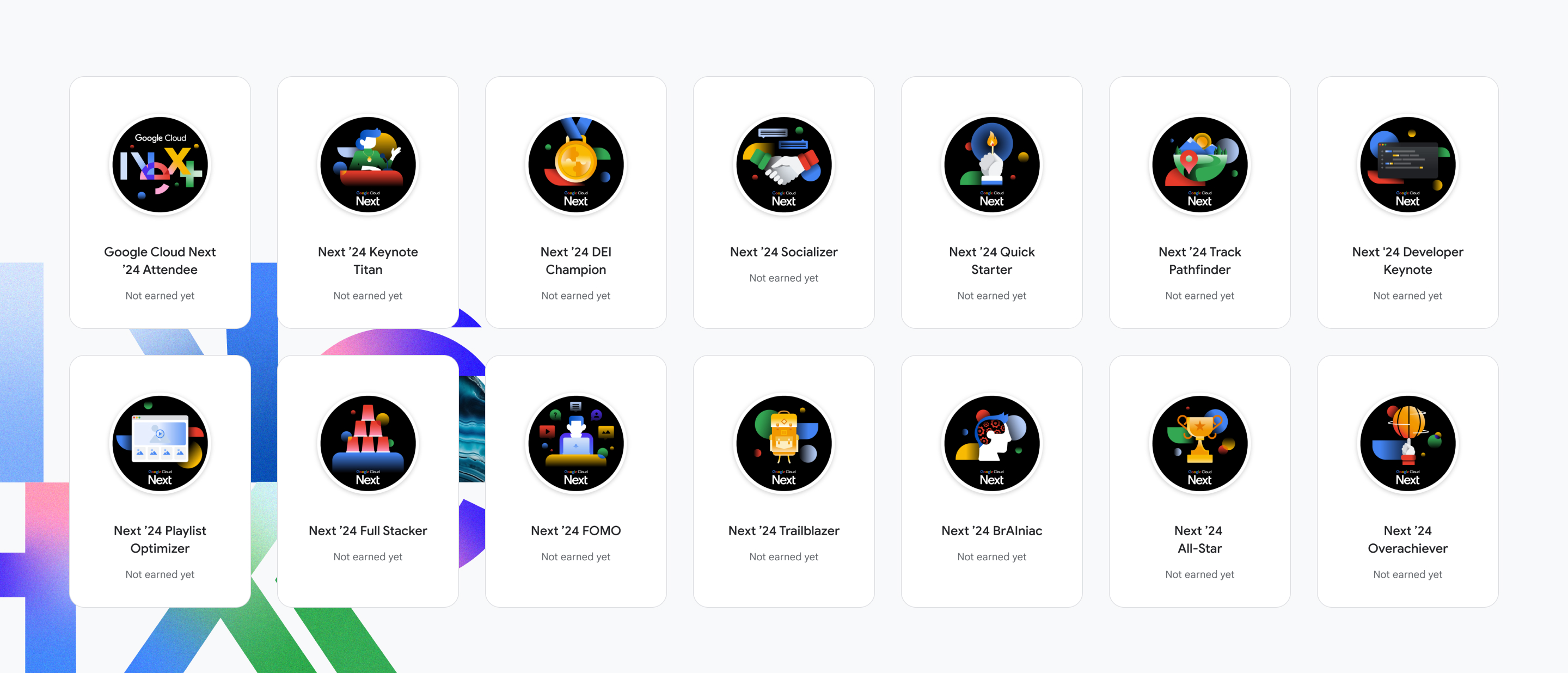
For 2024, the system evolved toward darker themes and gradient-driven illustrations. While flat color remains foundational to Google’s brand, gradients represented a deliberate evolution, aligning the visuals more closely with AI and the future-facing tone of the event. Most illustrations were refined rather than rebuilt, preserving familiarity while clearly signaling progression year over year.
The experience felt behind largely because it was still anchored in Material Design 2. Components, layouts, visual elements and interaction patterns no longer reflected Google’s current product ecosystem. For Next ’24, we aligned the experience fully to Material 3.
This updated the visual language to feel current, cohesive, and consistent with other Google products, especially as the event leaned heavily into generative AI. To build buy-in, we moved quickly and showed work early. The team produced rapid mocks and prototypes, often pairing Next concepts directly with existing Google products to make the value of the update clear.
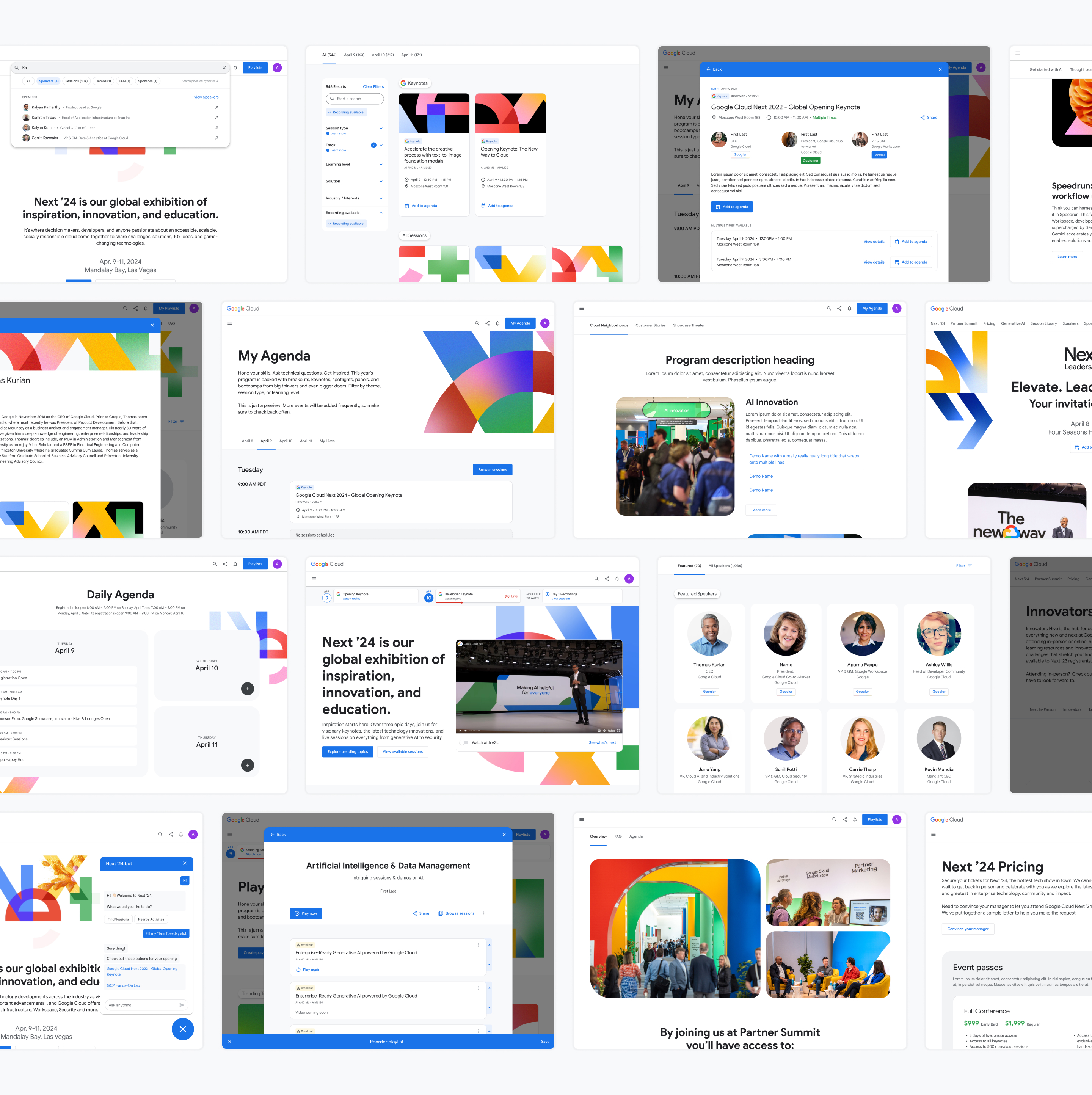
I worked directly with Google stakeholders while leading and mentoring two designers. Early expectations were focused on speed and cost, with limited trust in design quality. By delivering early and often, providing options, and tying decisions back to the Next ’24 vision, we shifted how my design team was perceived. My team became a strategic partner rather than a delivery function.
The redesigned experience delivered strong results across both years and helped rebuild stakeholder trust through early, frequent design delivery and clear visual direction.
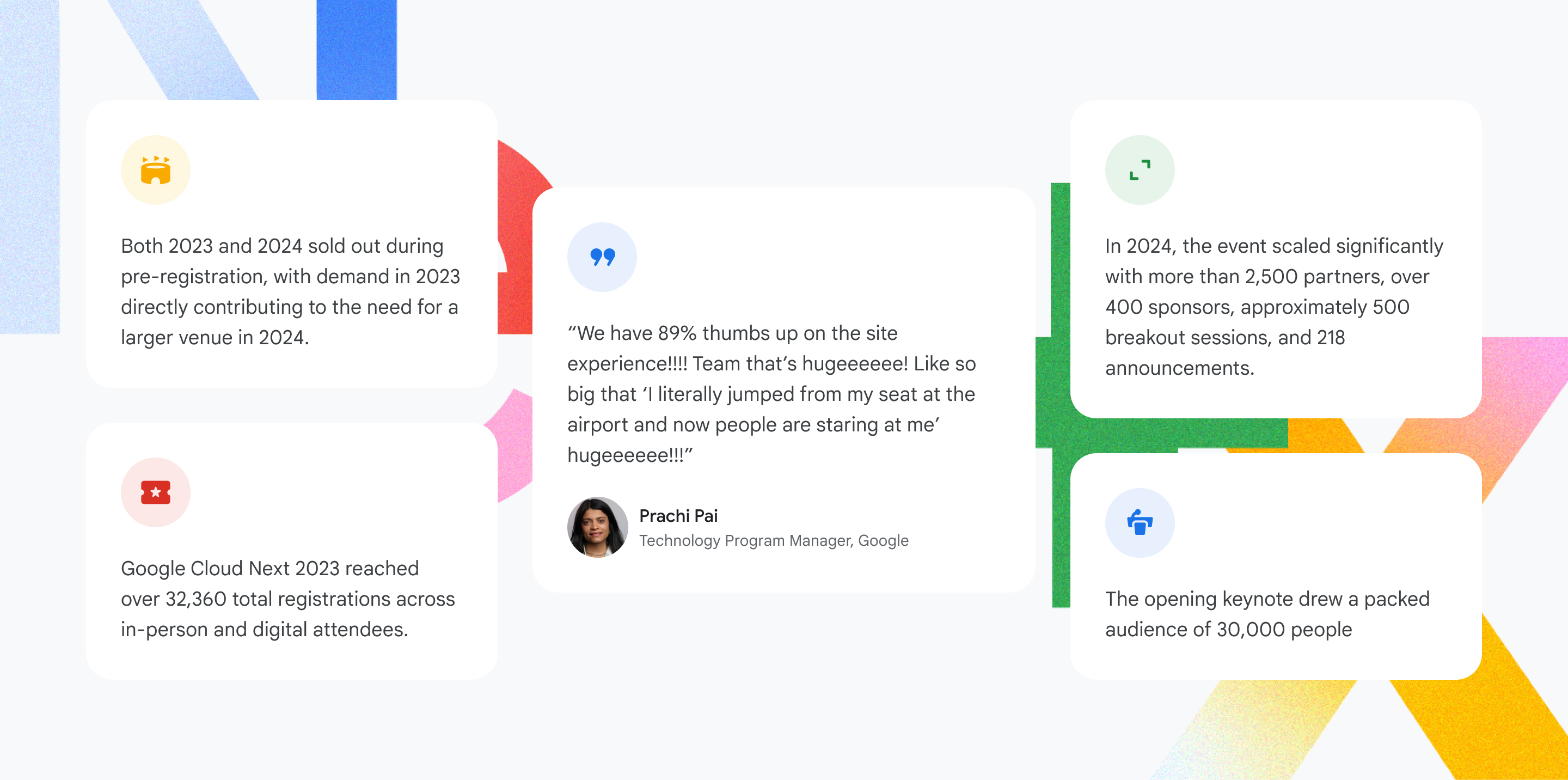
Both 2023 and 2024 sold out during pre-registration, with demand in 2023 directly contributing to the need for a larger venue in 2024. Google Cloud Next 2023 reached over 32,360 total registrations across in-person and digital attendees.
In 2024, the event scaled significantly with more than 2,500 partners, over 400 sponsors, approximately 500 breakout sessions, and 218 announcements. The opening keynote drew a packed audience of 30,000 people at Mandalay Bay, reinforcing the platform’s role as a critical driver of the overall event experience.


